
Junk Removal Cost: What West Sacramento Homeowners Pay
A junk pile can get out of hand fast. One weekend garage cleanup, one broken couch, one old treadmill that nobody wants to touch, and suddenly you are searching junk removal cost while staring at a stack of stuff near the driveway in West Sacramento. The good news is that pricing is not random, and once you know what actually drives the quote, the numbers make a lot more sense.
What junk removal usually costs in West Sacramento
If you have ever looked at two junk removal quotes and wondered why they were not even close, here’s the thing: most jobs are priced by how much space your junk takes up in the truck, then adjusted for weight, labor, and disposal.
As a starting point, the national average is about $241, but real jobs commonly land anywhere from $60 to $700 or more. In practical terms for West Sacramento, a small curbside pickup might be under $150, a garage cleanout often lands in the $200 to $400 range, and a big full-service haul can run $600 to $800 or higher.
That spread is normal. Local labor rates, transfer station fees, same-day scheduling, and how hard the crew has to work all change the total. A neat pile at the curb in Southport is one kind of job. A mattress, dresser, and broken elliptical dragged down a narrow stairwell is another.
How junk removal companies price a job
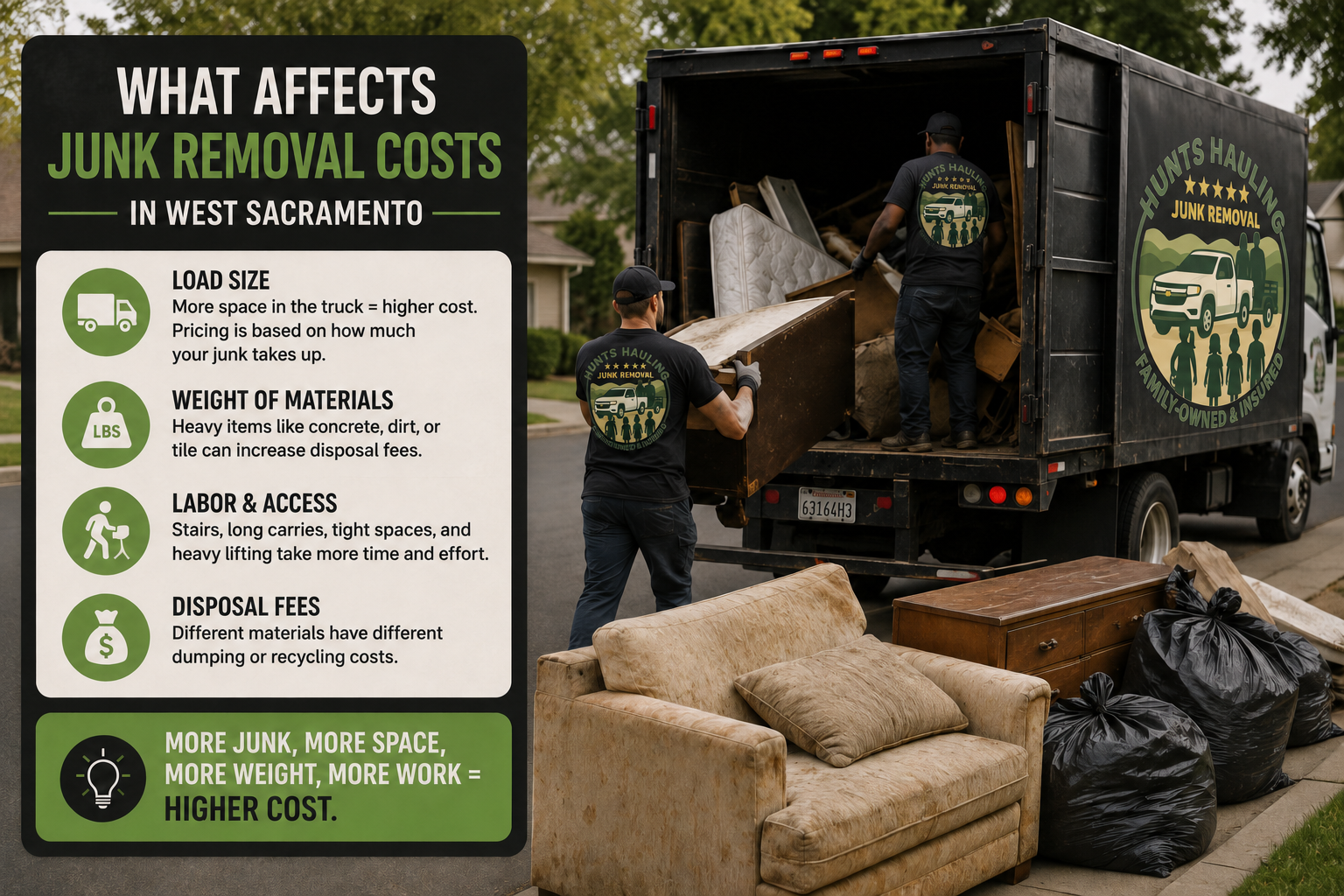
Most junk removal companies follow a simple formula, even if the quote sounds vague at first. Volume comes first, meaning truck space. After that, the price can move up for heavy material, extra labor, difficult access, or special disposal rules.
That matters because people often count items instead of thinking about space. But one giant sectional can take up more room than ten moving boxes. A small pile of tile can look harmless and still cost more than a much bigger pile of cardboard because the tile is so heavy.
The basic model is less mysterious than it looks. You are usually paying for four things at once: truck space, crew time, disposal costs, and convenience.
Load size is usually the main factor
Load size is the most common pricing method, and it is the easiest one to understand. Companies often break the truck into portions such as 1/8, 1/4, 1/2, 3/4, and full load. The bigger your pile, the more of the truck you use, and the more you pay.
A standard pricing guide often puts 1/8 truckload at $75 to $125, 1/4 load at $125 to $200, 1/2 load at $200 to $400, 3/4 load at $400 to $600, and a full load at $600 to $800. In West Sacramento, same-day service or harder jobs can push those numbers upward, but those ranges are still a useful baseline.
Bulky shape matters as much as actual item count. A sectional, old hot tub cover, or giant entertainment center can eat truck space fast. That is why one awkward piece can cost more than several smaller items stacked tightly together.
Weight can change the price even if the pile looks small
This is where people get surprised.
Concrete, dirt, brick, tile, roofing, plaster, and wet debris can make a small pile price like a much larger job. The truck may not look full, but it can become weight-full before it is visually full. That means the company hits disposal limits and extra dump costs much sooner.
If your pile includes dense material from a bathroom remodel or backyard project, expect weight to matter more than volume. A few buckets of tile and mortar are not priced like a few bags of clothes. Not even close.
Labor, stairs, and access can add to the bill
“Full-service” means the crew does the lifting, loading, and hauling for you. That convenience is exactly why junk removal costs more than tossing small bags into your regular trash cart.
Labor becomes a bigger part of the quote when the job is slow, awkward, or physically demanding. Upstairs pickups, tight hallways, long walks from a backyard shed, tricky parking, locked gates, and heavy pieces that need two or three people can all raise the price. Some pricing guides estimate labor alone at $100 to $300 on many jobs, which helps explain why access matters so much.
If the crew can back up to the driveway and grab everything in ten minutes, you usually pay less. If the crew has to make twenty trips through a side gate and around a pool fence, you usually pay more.
Disposal fees are part of what you pay for
Tipping fees are the charges disposal facilities collect to take waste. That sounds technical, but the idea is simple: somebody has to pay to dump or process the material after it leaves your house.
Those fees vary by material. Mattresses often have special handling rules. Refrigerators may need refrigerant processing. Electronics may need e-waste recycling instead of basic landfill disposal. Mixed debris from a remodel can also cost more to sort and dump.
So when a quote feels higher than expected, part of what you are paying for is invisible. The truck is only half the story. The other half is what happens after the truck pulls away.
Typical junk removal price ranges by load size
If you want fast numbers first, this is the simplest way to estimate your bill. Think less about item count and more about how much of a truck your pile would fill.
Small pickup or 1/8 truckload
This is the minimum-charge kind of job. Picture a few trash bags, one chair, a nightstand, or a very small curbside pile. In many cases, you can expect around $75 to $125.
The catch is that minimum charges often apply even if your load is tiny. That means one small recliner may cost almost as much as a few extra bags tossed in with it. If you have a small amount of junk, combining items into one pickup usually gives better value.
Quarter load
A quarter load fits the kind of job many homeowners actually have: a loveseat, a mattress, several boxes, a dresser, or leftovers from cleaning out one room. Expect something around $125 to $200, sometimes more if the pickup is indoors or same-day.
This is often the sweet spot for people who want fast relief without paying for a giant haul. It is enough space to clear the annoying stuff that has been blocking the garage wall for months.
Half load
A half load is a common garage cleanout or room cleanout tier. Old shelving, mixed boxes, a broken treadmill, a few furniture pieces, and random household junk can get you here quickly. Typical pricing often lands around $200 to $400.
Here is where labor details start to matter more. Same-day scheduling, upstairs removal, and heavy items can push a half-load job above the low end in a hurry. A neat driveway pile is cheaper than a packed spare room with furniture that has to be taken apart.
Three-quarter to full truckload
This is the range for bigger cleanouts: move-out junk, estate clear-outs, renovation leftovers, multiple rooms of furniture, or a garage plus backyard combo. Broadly, expect $400 to $800 or more for full-service hauling.
A full truckload usually means the crew is spending real time on site, not just tossing in a few items and leaving. That is why a large haul often feels expensive, but it is also where the value becomes obvious. One visit, one crew, one mess gone.
What you can expect to pay for common items
Sometimes you do not care about truck fractions. You just want to know what it costs to get rid of a couch, mattress, or old fridge. That is a fair way to think about it, especially for same-day jobs.
Furniture removal
Furniture removal often runs about $80 to $400 per piece, depending on size, shape, and how hard it is to move. A simple dining chair is at the low end. A large sectional is at the high end because it is bulky and awkward, even before stairs enter the picture.
Couches, recliners, dressers, dining sets, and bed frames usually fall somewhere in the middle. Shape matters a lot. A big puffy sofa can cost more than several smaller wood pieces because it swallows truck space like a suitcase that never quite fits in the trunk.
Mattress and box spring removal
Mattress removal often falls around $75 to $150. That sounds high for one item until you remember how annoying mattresses are to handle. They are floppy, awkward, hard to stack, and often subject to special disposal or recycling rules.
Add a box spring, stairs, or same-day pickup, and the price can climb. If the mattress is already outside and easy to access, you usually get a better number.
Appliance removal
Major appliance removal often runs about $60 to $250. Washers, dryers, ovens, and dishwashers tend to be more straightforward. Refrigerators, freezers, and air conditioning units can cost more because refrigerants may require special handling.
Water heaters can also cost more if they are heavy, in a tight space, or still connected when the crew arrives. The basic rule is simple: if the item is bulky, heavy, or regulated, it costs more to remove.
Electronics and e-waste
TVs, computer monitors, printers, desktops, and mixed electronics often cost about $20 to $200 depending on size and quantity. Older big-screen TVs usually cost more than small devices because they are heavier and harder to process.
E-waste is different from general junk because it often cannot go straight to a landfill. That extra sorting and recycling step is part of what you pay for.
Yard waste and outdoor junk
Outdoor junk can be cheap or surprisingly expensive. A few bags of leaves or trimmed branches may be easy. Fencing, treated wood, piles of wet brush, hot tubs, old patio furniture, and broken sheds are another story.
Green waste can be handled differently from treated lumber or demolition material. Outdoor jobs also tend to involve more labor because the pile is spread out, dirty, or stuck behind the house. A hot tub removal, for example, often costs more because it may need to be cut apart before it can even reach the truck.
Construction debris
Construction debris is where pricing jumps fast. Drywall, tile, lumber, cabinets, flooring, shingles, and concrete often fall into the $100 to $800 range, sometimes more for large or very dense loads.
The big issue is weight. A small pile of demo debris can cost more than a bigger pile of furniture because dump fees and crew effort rise quickly. If your job came from a bathroom or kitchen remodel, expect the quote to reflect that.
What makes junk removal cost more than expected
If your quote came in higher than some online average, there is usually a real reason. And honestly, it is often visible once you know what to look for.
Same-day or urgent pickup
Fast pickup usually costs more because the company has to rearrange routes, crew time, and disposal runs for that day. If you want the pile gone before the weekend, before house guests arrive, or before an HOA notices it, that convenience can carry a premium.
That is not a scam. It is a scheduling cost. On-demand bulky pickup is growing fast, and speed has value.
Heavy lifting or disassembly
Some items are simple to grab. Others fight back.
Treadmills, playsets, oversized sectionals, pianos, hot tubs, and old sheds often need to be taken apart, cut down, or moved carefully through narrow doors. That extra labor can add a lot to the quote because the job takes longer and may need more than two people.
Hard-to-reach pickup spots
A pile in the driveway is easy. A pile behind a backyard fence, down a long side yard, up apartment stairs, or in a no-parking zone is not.
Hard access raises labor time. In some pricing guides, access problems can add $100 to $400 to a job. That is why a photo of the route to the junk matters almost as much as a photo of the junk itself.
Special handling items
Paint, chemicals, propane tanks, tires, refrigerant appliances, and other restricted materials can lead to extra charges or a flat no. These items cannot just be tossed in with regular junk.
That does not mean your whole job is impossible. It just means you need to ask about those items early, before pickup day turns into an argument in the driveway.
West Sacramento factors that can affect your quote
National averages are helpful, but your actual quote is shaped by local conditions. West Sacramento is not priced exactly like a random city average online, and that is normal.
Local disposal and transfer costs
Sacramento-area landfill, transfer, and recycling fees all feed into what you pay. Even if a national article shows a lower number, local disposal pressure can push West Sacramento pricing higher.
This is especially true for heavy debris, mattresses, appliances, and mixed renovation waste. A job is only cheap if it is cheap to dump and quick to load. If either part gets expensive, your quote follows.
Neighborhood access and property layout
Property layout matters more than most homeowners expect. Older homes with tight side yards, apartment complexes with long walks from parking, HOA rules about where trucks can stop, and limited curb access can all change the price.
This is the kind of thing you notice on pickup day. If a truck cannot park close, the crew becomes the truck. Every extra step becomes labor.
Seasonal cleanouts and moving spikes
Spring cleanouts, summer moving season, and post-renovation periods can all tighten availability. When demand goes up, same-day pricing often gets less forgiving.
That does not mean you cannot get a fair quote. It just means fast service during busy stretches tends to cost more than a flexible pickup booked a few days out.
Junk removal vs dumpster rental vs regular trash pickup
Before booking, it helps to choose the right service. Junk removal is not always the cheapest option, but it is often the easiest.
When junk removal is worth the extra cost
If you need labor, speed, or help with bulky items, junk removal is worth the extra money. That is the direct answer.
It is the easiest option when you want the mess gone in one visit. No loading a dumpster yourself. No renting a truck. No begging a friend to help move a sleeper sofa. If your goal is to point at the pile and have it disappear, full-service hauling is the right fit.
When a dumpster rental is the cheaper fit
If your project creates debris over several days, a dumpster can be cheaper. A remodel, roof job, or major whole-house cleanout often fits this model better because you can load as you go.
A one-week dumpster rental averages about $380, which can be a good deal for ongoing projects. The catch is weight limits, possible overage fees, and the need for driveway space. You also do all the lifting yourself.
When regular city trash service is enough
Regular trash and recycling service is much cheaper because it is a utility, not an on-demand hauling job. It works well for normal bagged household waste and small weekly amounts.
But it is not built for couches, mattresses, renovation debris, or a garage full of old furniture. If the pile would make your regular bin laugh at you, it is probably a junk removal job.
How to get an accurate junk removal quote before booking
A good quote starts with good information. If you are vague, the estimate stays vague.
Send photos and describe the pile clearly
Photos are the easiest way to improve accuracy. Send a wide shot of the whole pile, a closer shot of the material, and a photo that shows access. Include where the junk is located, such as curbside, garage, backyard, upstairs, or inside a room.
A short description helps too. Mention rough width and height, the biggest items, and any heavy material mixed in. Three photos can save you from a lot of guesswork.
Ask what is included in the price
Always ask whether the price includes labor, loading, hauling, disposal, and cleanup. Also ask whether there is a minimum charge.
This is how you protect yourself from “starting at” pricing that sounds cheap until the crew arrives. A solid quote should tell you what you are actually getting, not just tease a low number.
Confirm add-on fees before pickup day
Ask directly about stairs, long carry distance, heavy debris, same-day service, appliance recycling, mattress fees, and restricted items. Get those details sorted before the appointment.
The cheapest quote upfront is not always the cheapest final bill. Clear beats cheap-looking.
Common mistakes that lead to overpaying
A few simple mistakes can make a normal job cost more than it should.
Counting items instead of estimating volume
Five small items can cost less than one oversized sofa. That is why item count is a weak shortcut.
Think in truck space, not just pieces. If you focus only on the number of objects, your estimate will often be off.
Hiding heavy debris in mixed piles
Mixing concrete, dirt, tile, or roofing into a general junk pile is one of the fastest ways to trigger a price jump. A crew may quote based on volume, then discover the load is far heavier than expected.
Be upfront about dense material. It saves time, avoids awkward renegotiation, and gets you a more honest number from the start.
Choosing the lowest quote without checking the fine print
Low quotes can hide disposal fees, labor charges, special item fees, or vague “final price on site” language. That does not mean every low quote is bad. It means you need to know what is actually included.
A clean, all-in price is usually better than a bargain number with strings attached.
Sample junk removal scenarios for West Sacramento homeowners
Real examples make this easier to picture, so here is what common jobs often look like in practice.
One mattress and bed frame from a curbside pickup
If your mattress and basic bed frame are already at the curb with easy parking nearby, this is usually a lower-cost job. Expect something around $100 to $175 in many cases, depending on mattress size, whether a box spring is included, and local disposal rules.
Easy access does a lot of the work here. No stairs, no long carry, no surprise fee waiting around the corner.
A garage cleanout with old shelves, boxes, and a broken treadmill
This kind of job often lands between a quarter load and a half load. If the pile is organized near the garage opening, you may be around $175 to $350. If the treadmill is heavy, the shelves need breaking down, and the pile runs deeper than it first looks, the price can move higher.
This is one of the most common same-day calls because it starts as “just cleaning up a little” and ends with half the garage suddenly unusable.
A move-out haul with furniture from multiple rooms
A move-out haul often includes beds, dressers, a couch, dining chairs, bags of leftover household junk, and whatever did not fit in the moving truck. Depending on volume, this can easily hit half load to three-quarter load pricing, often around $300 to $650.
Stairs, narrow turns, and furniture disassembly can push it up from there. The volume matters, but so does the time spent inside the home.
Tile, drywall, and demo debris from a bathroom remodel
This is the classic example of a small pile that is not a cheap job. Even if the debris only fills a small area of the garage, dense material like tile, mortar, drywall, and old vanity pieces can create a heavier disposal bill.
Expect this kind of haul to run roughly $200 to $500 or more depending on weight, bagging, and access. The pile may look modest. The truck scale may disagree.
How to lower your junk removal cost without making the job harder
Saving money helps, but only if the job still gets done without turning into a second project.
Separate donation items from true trash
Usable furniture, household goods, and clean items in decent shape do not always need to go in the paid junk pile. If you separate those out first, your haul volume drops and your cost may drop with it.
The trick is to be realistic. A clean side table is a donation item. A broken particle-board dresser with one drawer hanging off is probably junk.
Move what you can to an easy pickup spot
If it is safe for you to move, placing items in the driveway or curbside can reduce labor time. That often helps lower the quote because the crew can load faster.
Do not hurt yourself trying to save a few dollars on a water heater or treadmill. But boxes, loose yard debris, and small furniture are worth staging if you can do it safely.
Book one larger pickup instead of several small ones
Minimum charges make tiny jobs expensive. If you book three separate small pickups, you may pay three separate minimums.
Combining loads into one larger pickup usually gives better value. It is like ordering delivery three times in one day instead of once. The food is the same, but the extra trips cost you.
Questions to ask before you schedule same-day junk hauling
A few smart questions can save you from most pricing surprises.
Can you price this from photos?
Ask for a photo-based estimate. It is faster, easier, and usually more accurate than trying to describe a pile over the phone.
If your photos show the junk, the access path, and the biggest items, you are already ahead.
Is the quote all-inclusive?
Ask whether labor, hauling, disposal, and cleanup are included in the total. If the answer is vague, keep asking until it is not.
You want one number you can trust, not a low starting point that grows on pickup day.
What items are not allowed?
Ask upfront about paint, chemicals, propane tanks, tires, refrigerants, and other restricted materials. It is better to know now than while the truck is parked outside.
A quick list of “not allowed” items keeps the whole job smoother.
What is the easiest next step?
Take two quick photos of the pile and one photo of the access path, then ask for a quote that includes access details. That one move gives you the best shot at a clear, usable number.
Frequently Asked Questions
What is the average junk removal cost for a homeowner?
A typical junk removal job often falls around $200 to $450, but small pickups can be under $150 and large full-service cleanouts can run $600 to $800 or more. The biggest driver is usually how much truck space your junk takes up.
Why does one couch cost so much to remove?
A couch is bulky, awkward, and hard to stack. Even one piece can take up a big chunk of truck space. If it is upstairs, extra heavy, or unusually large, labor adds even more to the price.
Is curbside junk removal cheaper than in-home pickup?
Yes, it usually is. Curbside pickup cuts labor time because the crew does not have to walk through your house, carry items down stairs, or work around tight spaces. Easier access usually means a lower quote.
Do junk removal companies charge by item or by truckload?
Most charge by truckload or by volume first, then adjust for weight, labor, and disposal. Some single-item jobs have flat pricing, but volume is still the main idea behind most estimates.
Can same-day junk hauling cost more?
Yes. Same-day service often costs more because it reshuffles routes and crew schedules. If you need urgent pickup before the weekend or before guests arrive, that speed can come with a premium.
How can you get the most accurate quote?
Send clear photos, mention where the junk is located, and say if anything is heavy, upstairs, or hard to access. Also ask if the quote includes labor, hauling, disposal, and any extra fees. Try that before booking, and your final bill is much less likely to surprise you.
