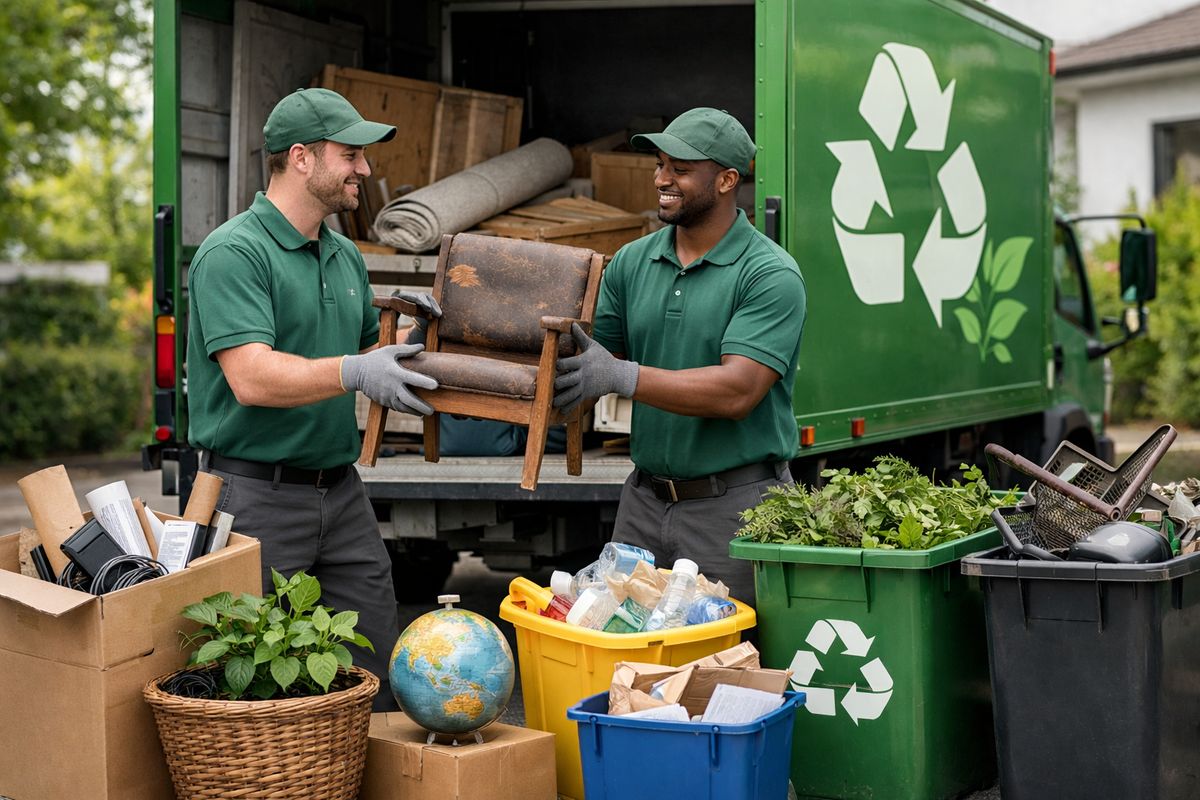
Eco-Friendly Junk Removal: How to Choose a Better Crew
When your garage is half on the driveway, the pickup window is tight, and a West Sacramento summer afternoon is already heating up the concrete, “fast” starts to sound better than “careful.” But eco friendly junk removal is not a slow luxury. A better crew can haul the same day and still keep usable, recyclable, and regulated items out of the wrong place.
What “eco friendly junk removal” should actually mean
Eco-friendly junk removal should mean something simple: your stuff does not all get tossed into one truck and dumped at the landfill by default. Instead, items get sorted for donation, recycling, repurposing, or proper disposal first, with landfill used as the last stop.
That matters more than the label on a website. Plenty of companies sound green because they mention recycling once. The real test is what happens after pickup. If a crew cannot explain that part clearly, the eco-friendly promise is mostly decoration.
Fast pickup doesn’t have to mean landfill first
Here’s the thing: speed is not an excuse for waste. Same-day service can still be responsible if the crew already knows which donation centers accept furniture, which recyclers take scrap metal, and where e-waste or appliances need to go.
A solid operation plans before the truck gets loaded. That means keeping reusable goods separate, avoiding contamination, and not tossing paint cans on top of cardboard and old lamps. If you are booking a rush job, that planning matters even more because quick decisions tend to create messy outcomes unless the process is already built in.
If timing is your biggest concern, it helps to understand how fast local pickup usually works before you book. Fast service is easier to trust when the schedule and the disposal plan both make sense.
The real difference is what happens after the truck leaves
Your buying decision should revolve around the after part. Once the truck pulls away, your items usually go down one of five paths: donation, recycling, reuse, regulated disposal, or landfill.
That order matters. Donation keeps usable goods in circulation. Recycling turns materials like metal, cardboard, and some electronics into feedstock for something else. Reuse and repurposing extend life without much processing. Regulated disposal handles items that cannot legally or safely be treated like ordinary trash. Landfill is still part of the system, but it should not be the starting point.

How to tell if a junk removal crew is truly greener
Marketing language is cheap. Process is not. If you want a greener crew, look for signs of a working system instead of nice-sounding phrases.
Ask about diversion rate, not just “green practices”
Diversion rate sounds technical, but it is just the share of material kept out of the landfill. If 10 loads go out and 4 loads worth of material get donated, recycled, or otherwise recovered, that is a 40 percent diversion rate. A simple 40% diversion rate example makes the idea easy to picture.
You do not need a perfect spreadsheet from every local hauler. But you should hear a rough percentage, or at least a clear explanation of how sorting works and how much usually gets diverted. Vague answers like “you know, we recycle when possible” are not enough.
Look for donation and recycling partners
Named partners tell you a lot. A trustworthy crew should be able to say where furniture, housewares, scrap metal, cardboard, appliances, or e-waste usually end up. Not every item has a donation path, of course, but a real eco-minded crew already knows the local outlets.
That is not some fringe standard. In fact, 46% of franchises adopted recycling and donation partnerships to meet demand for greener disposal. If larger operators see those partnerships as standard practice, a local crew should be able to explain its own network too.
Check whether the crew can explain its sorting process
The trick is to listen for details. Better crews separate items by type, set aside reusable goods, keep recyclable materials clean enough to be accepted, and train staff to recognize what needs special handling.
You want to hear practical language, not buzzwords. “Metal goes one way, clean cardboard another, electronics are separated, mattresses follow a different process, and paint gets flagged” is a good sign. So is any mention of contamination, because mixed junk often ruins recyclable loads.
Notice whether booking and routing seem organized
This sounds small, but it is not. Organized booking often points to organized hauling. If the schedule is clear, the arrival window makes sense, and accepted items are confirmed upfront, the rest of the operation usually runs better too.
Routing matters for the environment as well as convenience. Industry case studies show fuel use by 22% can be cut through route optimization. Cleaner routing means less driving around, lower fuel waste, and often smoother same-day service for you.
What items need special handling before you book
A common mistake is assuming everything can go in one big pile. Some items need extra care, extra fees, or a completely different service.
E-waste, bulbs, paint, and batteries
Electronics, fluorescent bulbs, paint, and batteries should never be “just tossed.” E-waste contains materials that need proper recycling, and many states have electronics disposal rules because the volume is huge, with 1.2 million tons tied to junk removal annually in the United States.
Bulbs and batteries can contain hazardous components. Paint can create disposal problems depending on type and condition. A decent crew should tell you exactly whether those items are accepted, how they are handled, and whether any surcharge applies.
Construction debris and remodel leftovers
Remodel debris gets tricky fast. Wood, drywall, concrete, tile, roofing scraps, and old cabinets may seem straightforward, but older materials can carry extra risks. Lead-painted surfaces, treated lumber, industrial coatings, and suspicious dust are a different story.
Even regular construction debris is often regulated by location and volume. Concrete and drywall may need specific facilities, and hazardous material misclassification can create real legal and cleanup problems later. If you are comparing hauling to a container solution, it helps to read about when a truck crew beats a dumpster, especially for mixed debris and labor-heavy cleanup.
Items a regular junk crew may not take at all
Some materials are outside the lane of ordinary junk hauling. Chemicals, asbestos-related materials, mercury items, certain solvents, and anything questionable often require specialty handling.
The safe move is simple: ask first instead of guessing. If a company sounds casual about hazardous waste, that is a red flag, not a convenience.

Questions to ask before hiring a same-day junk hauling crew
A quick call or quote form can tell you a lot if you ask the right things. You do not need an interrogation. Just a few direct questions.
“Where will my stuff go?”
This is the best first question because it cuts through the sales script. Ask for a plain-language breakdown of what usually gets donated, recycled, repurposed, or dumped.
A real answer sounds specific. A weak answer sounds slippery. If the explanation ends at “we try to be green,” move on.
“Can you show proof of responsible disposal?”
Proof does not have to mean a thick binder of paperwork. Donation confirmations, recycling receipts, facility relationships, or itemized invoices can all help.
Honest crews usually do not get weird about this. If responsible disposal is part of the service, showing the process should feel normal.
“Do you handle special items legally and safely?”
Ask directly about e-waste, appliances, mattresses, paint, and renovation debris. Compliance matters because some materials need labeling, secure storage, or approved disposal routes, especially when hazardous or universal waste is involved.
You are not being picky. You are making sure your cleanup does not turn into somebody else’s illegal shortcut.
“How is pricing set?”
Pricing should be clear before the truck shows up. Most crews charge by volume, by item, or by a mix of labor and material type. Heavy loads, stairs, awkward access, and regulated materials often cost more.
That is normal. Surprise fees are not. If you want a clearer picture of what local hauling usually costs, compare the pricing model before you book the fastest available slot.
Price, value, and the catch with the cheapest quote
The lowest quote is not always the cheapest job. Sometimes it is just the least honest one.
What usually affects junk removal cost
Volume is the big one, but weight matters too. A half truck of old concrete does not price like a half truck of cardboard boxes. Labor, stairs, distance from curb to item, bulky furniture, and same-day urgency can all push the number up.
None of that is a problem if the quote is clear. The problem starts when pricing is vague and the final bill grows on-site.
When paying a little more is worth it
Greener hauling can cost a bit more because sorting takes effort, donation drop-offs take time, and some recycling or regulated disposal routes come with fees. But that extra cost often buys a better outcome: less landfill waste, cleaner handling, and fewer ugly surprises.
Customer demand is pushing the industry in that direction anyway. Reports show eco-friendly disposal solutions are a real market driver, which makes sense. People want speed, but not at the cost of careless dumping.
Red flags in suspiciously low quotes
The catch with ultra-low pricing is usually shortcuts. Watch for estimates with no real scope, no mention of disposal method, pressure to pay cash only, or a refusal to answer basic questions about where items go.
Cheap can be fine. Suspiciously cheap is different. If the quote looks lighter than your pile of junk, trust your instincts.
Common mistakes that make eco-friendly hauling harder
A little prep on your end can make responsible hauling much easier.
Mixing everything into one giant pile
One giant heap slows sorting and lowers the odds of donation or recycling. A box of clean housewares buried under broken fencing, wet cardboard, and half-used paint cans is much less likely to be salvaged.
Think of it like unloading groceries. If produce, frozen food, and cleaning supplies all land in one mess on the kitchen floor, putting everything away gets harder. The same goes for junk. Even rough separation, furniture here, metal there, electronics aside, helps a lot.
Waiting until the truck arrives to ask questions
Same-day jobs move fast. If you wait until the crew is in the driveway to ask about accepted items, special fees, or disposal practices, you are already late.
Confirm the basics before booking. That includes the item list, pricing method, and what eco-friendly actually means in practice.
Assuming “eco-friendly” means the same thing for every company
It does not. This term is loose unless it is backed by a process, partner network, and proof. Vague green claims are not enough.
A better crew can explain the system in plain English. That alone tells you a lot.
Best junk removal options by situation
The best crew depends on the mess in front of you.
Best fit for a garage or attic cleanout
For garage or attic jobs, look for strong donation and reuse habits. These cleanouts usually include furniture, household goods, tools, boxes, seasonal items, and random duplicates that still have life left in them.
You want a crew that sees usable stuff, not just volume. That difference can keep a surprising amount out of the landfill.
Best fit for yard debris or bulky outdoor items
Outdoor jobs often include branches, fencing, patio furniture, planters, rusted grills, and scrap metal. Some of that is green waste, some is recyclable, and some is plain disposal.
The right crew should know the difference without guessing. That is especially useful when the pile looks simple from the driveway but turns mixed once it starts moving.
Best fit for a remodel or landlord turnover
These jobs need more than muscle. Look for a crew that understands construction debris, can sort materials properly, and knows when something crosses into regulated handling.
Turnovers also move fast, which makes process even more valuable. A rushed cleanup with bad sorting is how costs, fines, and landfill waste creep up.
Best fit for urgent same-day pickup
For urgent pickup, focus on four things: clear pricing, a confirmed accepted-item list, real answers about disposal, and a crew that can tell you where the load is likely headed.
That is the simple rule. Before booking anyone, ask one direct question about diversion. If the answer is fuzzy, keep looking. If you want a local option that treats fast service and responsible hauling like they belong together, try Hunt’s Hauling at https://huntshauling.com/.
Frequently Asked Questions
Is eco friendly junk removal more expensive?
Sometimes a little, but not always by much. Better sorting, donation drop-offs, and special recycling fees can raise the price, yet that often comes with cleaner service and fewer disposal shortcuts.
What does diversion rate mean in junk removal?
It means the percentage of material kept out of the landfill through recycling, donation, reuse, composting, or other recovery methods. It is one of the clearest ways to judge whether a company is truly greener.
Can same-day junk hauling still be eco-friendly?
Yes. Fast service and responsible disposal can work together if the crew already has a sorting system, facility relationships, and a clear plan for different item types before loading the truck.
Will a junk removal crew take paint, batteries, and electronics?
Some will, some will not, and some charge extra. Those items often need special recycling or regulated disposal, so the smart move is to ask before booking.
What should you separate before the crew arrives?
If possible, keep furniture, metal, cardboard, electronics, yard waste, and anything hazardous-looking apart from each other. Even basic separation makes donation and recycling much easier.
